
Monday, October 15, 2012

Pinhole Images

Original Pinhole

Inverted Pinhole
The picture appears to be slightly distorted due to the photo paper being placed in the can that is rounded as a curve. When the image was originally reflected onto the paper, it was reflected upside down because of the light patterns.
Tuesday, October 9, 2012
Tilt Shift Photos

South Parking Lot

Kobe Jumping on Soccer Field

Marisa by Football Field

Me Sitting on the Tennis Court

Back of the School
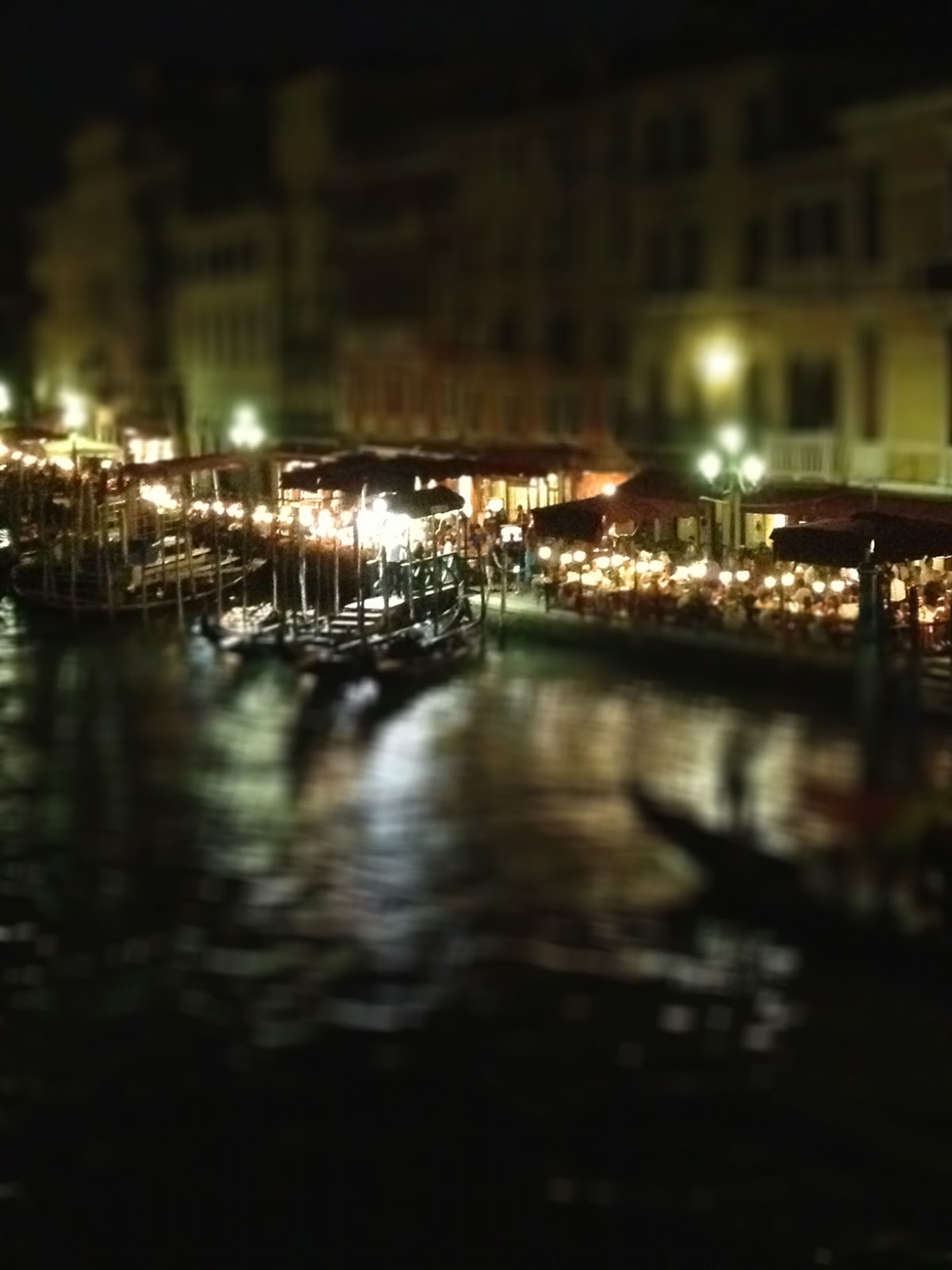
Restaurants in Venice, Italy
Wednesday, October 3, 2012
Web Assignment 3: Brownie Camera
1.A brownie camera was a snapshot, low priced, photography camera that was created in hopes of enabling more and more people to have access to taking pictures.
2. The brownie camera was created by Eastman Kodak in the 1900's.
3. Brownie cameras changed society and photography by allowing more and more people to have access to photography at low prices. Rather than just having inventors or people with more income to be able to be involved in the world of photography, normal, everyday people were given the opportunity to take pictures.
Sunday, September 30, 2012
Web Assignment 2: Daguerrotypes
1. A daguerreotype, which was invented in 1839, is a photograph that is taken by an early process using an iodine-sensitized silver plated surface and mercury vapor. This kind of photograph resembles a mirror because the image is, at an angle, is reflected off of the silver surface to create a dark image. They were popular and prominent during the time period of 1840-1855, and it replaced the process of the camera obscura.


3. A stereograph is a specific technique that is used to show the depth in a picture by placing the to 2D images together in order to form a 3D image while using a stereoscope. The technique, which was invented in 1860, was very popular then and for the next few decades.


4. A carte de visite was a tiny albumen print that was commonly used as photo cards throughout the 1800's.

5. Matthew Brady as a well known American photographer during the 1800's who was made famous by his photos of celebrities and records of the American Civil War. Alexander Gardner, a Scottish photographer,was famous in the United Sates, from his images of the Civil War and of Lincoln. Both of them are notable for daguerrotype photography and they were active during the Civil War time period.


Monday, September 17, 2012
Web Assignment 1: Nicephore Niepce
A) Nicephore was a famous French inventor and is known for creating the first known photograph in 1825. Before he experimented with photography, at age thirty, he served in the army under Napoleon's rule, and later, he went home to continue his scientific research with his mother and siblings. When first exploring with camera obscuras, he would be able to create photographs but it would only last temporarily, for it would soon fade away.
 B) He is known for creating the first photograph, which he took of the view from the Window at Le Gras.
C) It was the first photograph ever taken, and it was produced on a polished pewter plate covered with petroleum, which hardens when exposed to light.
D) It was taken in France of a view of the Window at Le Gras.
E) It took a a day of exposure of about eight hours, and then the plate was exposed, and he washed the picture with a mixture of lavender oil and while petroleum in order to wash away any bitumen that had not been hardened by the light.
F) The photo was taken in 1825.
EXTRA CREDIT) It was kept in Texas, but is now located in Germany
Subscribe to:
Posts (Atom)